
How to Respond to a Building Permit Checksheet in Oregon
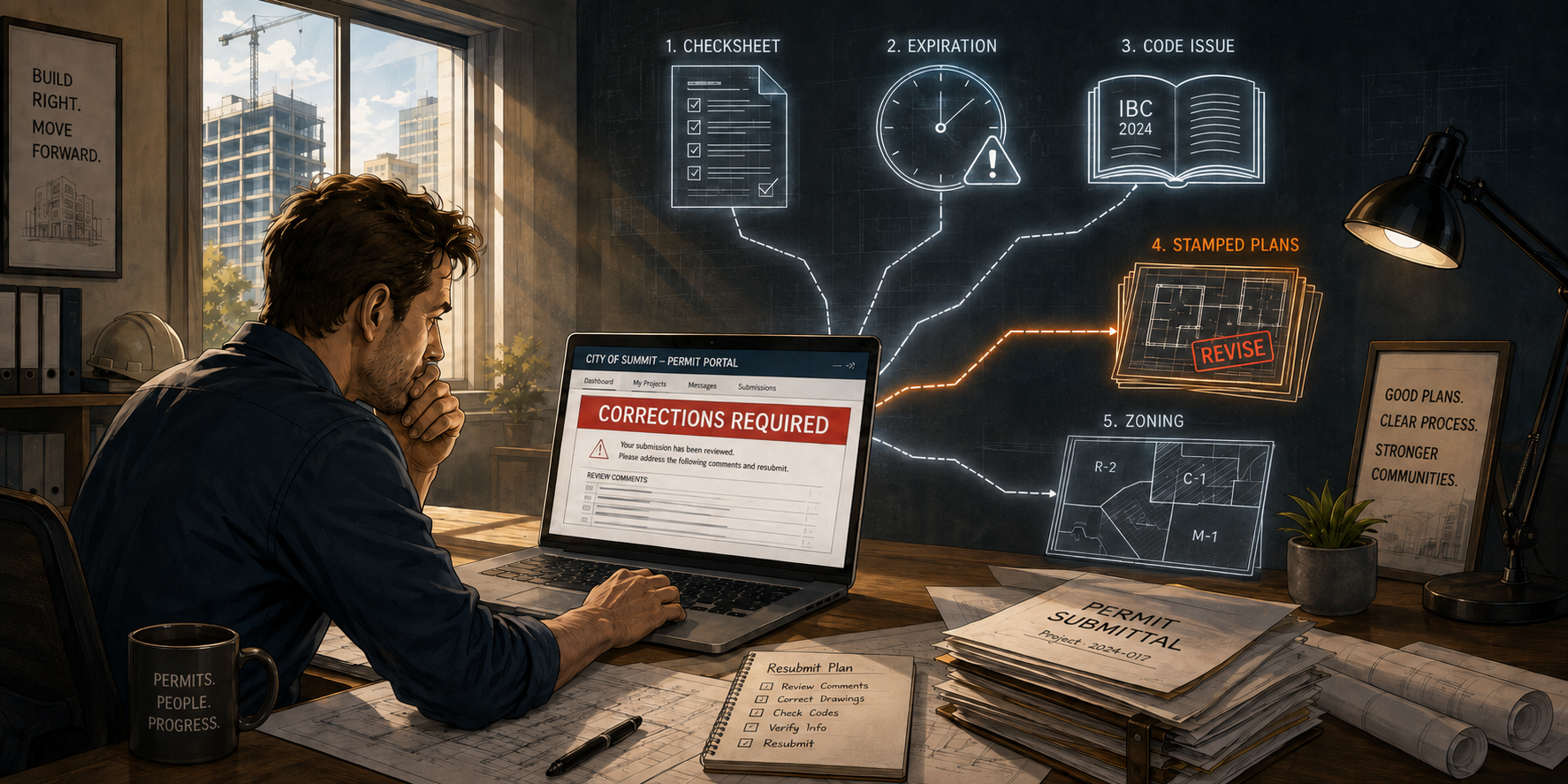
A “corrections required” notice can mean several different things. The first step is identifying whether the problem is intake, checksheet comments, code interpretation, plan mismatch, zoning, or expiration.
A step-by-step guide to categorizing comments, writing a response the reviewer can verify, and avoiding another correction cycle
Building Code and Permit Support · Checksheet Response
JR-DBA reviews checksheets, categorizes reviewer comments, and prepares coordinated resubmittals intended to close a review in one pass rather than two or three. We work across residential and light commercial permits throughout Oregon.
A checksheet is not a denial. It's a list of items the reviewer needs corrected, clarified, coordinated, or documented before that portion of the review can be approved. But a poorly organized response can turn one checksheet into two — and the second cycle often costs more time than the first one did.
Most repeat corrections don't happen because the applicant missed something. They happen because the resubmittal never fully closed the reviewer's question. Closing it takes a specific process, not just a fast turnaround.
Gather the Complete Record Before You Respond
Before touching a drawing, assemble the exact plan set and documents last reviewed, every checksheet and reviewer comment, any previous response letters, and the revision dates on every sheet.
A response prepared against an obsolete plan set can solve yesterday's comment while creating a new conflict with the documents currently in review. Permit recovery is partly a code exercise and partly a document-control exercise — both have to be correct, and the second one is where most of the avoidable delay lives.
Portland and Washington County both run electronic review systems that expect a response tied to each numbered comment, with properly versioned replacement files wherever drawings have changed. (Portland checksheet instructions · Washington County resubmittal guide)
Sort Every Comment Into a Category
Long checksheets feel overwhelming because comments involving very different issues are presented in one list. Sorting each comment into a category before you touch a drawing tells you what kind of response it actually needs.
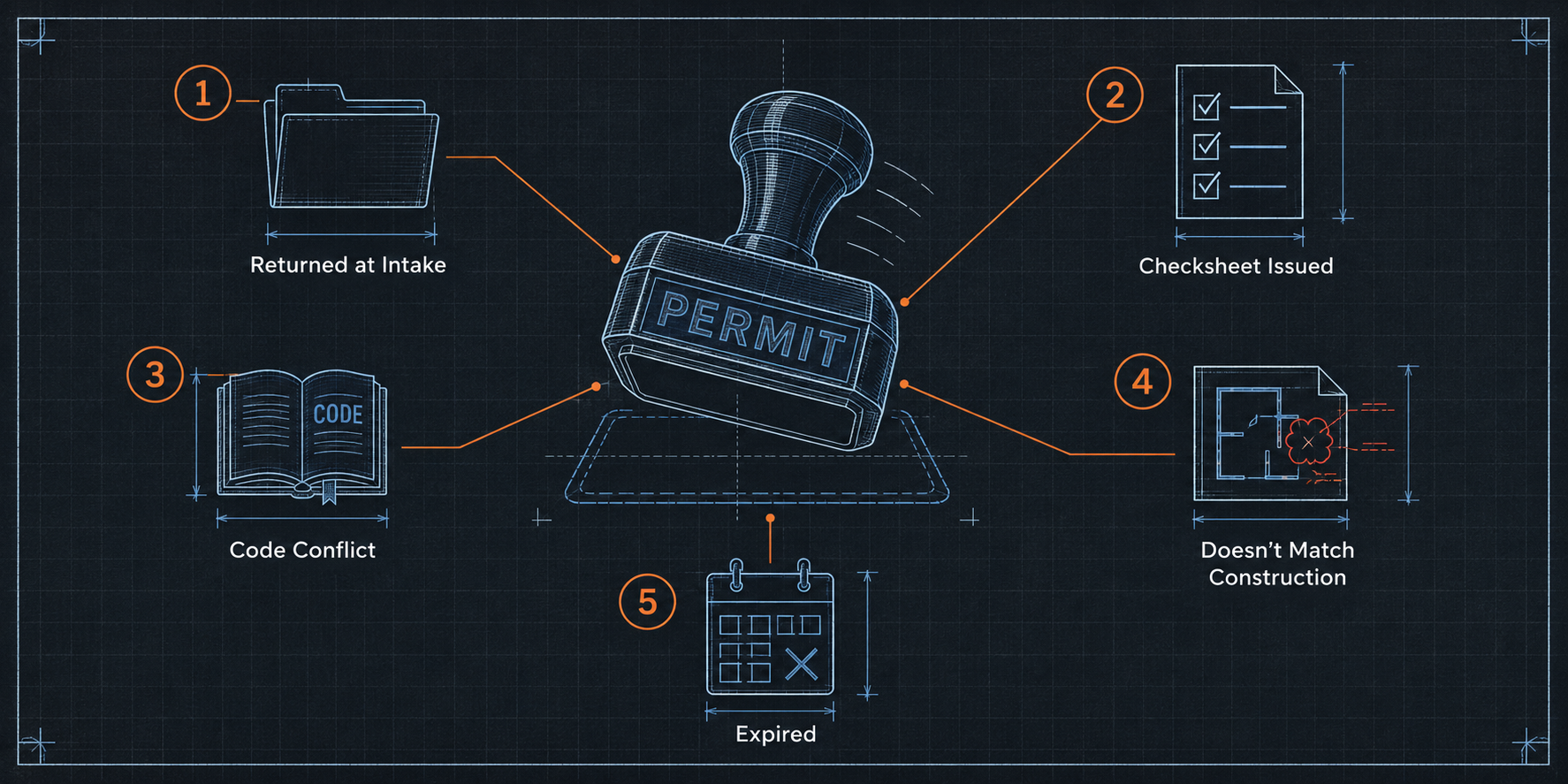
Not every permit problem is the same. A returned intake item, checksheet comment, code conflict, field mismatch, or expired permit each requires a different response.
Missing information. The reviewer needs a dimension, detail, schedule, calculation, or existing-condition description that isn't shown. This is usually the fastest fix.
Coordination conflict. Two parts of the submission disagree — the floor plan doesn't match the door schedule, or the energy documentation describes windows that differ from the elevations.
Accepted code deficiency. The design doesn't meet a requirement, the reviewer's read is reasonable, and a compliant revision is practical. Revise and document the correction clearly.
Interpretation question. You and the reviewer disagree about which provision applies or how a condition should be classified. This calls for a concise code analysis and a direct conversation, not an emotional rebuttal.
Prescriptive path that's impractical. The requirement's safety objective is legitimate, but the prescribed solution is physically impractical or poorly suited to the building. This may justify an alternate method — see Appeals, Variances, and Alternate Methods for how that process works.
Issue outside building-code review. The obstacle belongs to planning, fire prevention, or another authority. A building-code response can't resolve it.
Once categorized, build a response matrix: the original comment number and wording, the cited code section, whether it's accepted, questioned, or needs clarification, the proposed response, every affected sheet, and who's responsible for the revision. This matrix becomes the control document for the resubmittal.
Write a Response the Reviewer Can Verify
Revise and resubmit. When the comment is correct and the fix is reasonable, this is the fastest path — but a strong response does more than say revised or will comply. It names exactly what changed and where to find it:
Response: Accepted. Door 104 has been revised to provide the required clear width. See revised Floor Plan A2.1, Door Schedule A6.1, and Detail 4/A8.2.
The response letter, drawings, schedules, and consultant documents should all tell the same story. If the letter promises a change that doesn't appear on the plans, the comment isn't resolved.
Get clarification first, when the issue is genuinely ambiguous. Contacting a building code consultant, or in some cases the reviewer when they are available, can be worthwhile when a comment appears to rely on an incorrect project assumption, conflicts with another discipline’s comment, or could reasonably be resolved more than one way.
That said, do not treat the building inspector or plans examiner as a general project consultant. Their time is limited, and repeatedly asking broad, unfocused questions can slow the process down, frustrate the review relationship, and make the project look less organized. Before contacting the jurisdiction, identify the exact comment, the applicable code section, the drawings affected, and the specific decision you need. A focused question is much easier to answer than, “Can you explain the checksheet?”
For many projects, a code consultant is the better first stop. They can help interpret the comment, separate true code issues from documentation gaps, prepare a clear response strategy, and determine whether the jurisdiction actually needs to be contacted.
Escalate when the comment reveals a bigger problem. Some comments aren't corrections at all — they're a genuine code conflict, an interpretation dispute, or a sign the permit itself has stalled for a different reason (an intake issue, an expired status, work that no longer matches the approved plans). If that's what you're looking at, My Oregon Building Permit Was Rejected or Stalled walks through those paths.
What a Complete Response Includes
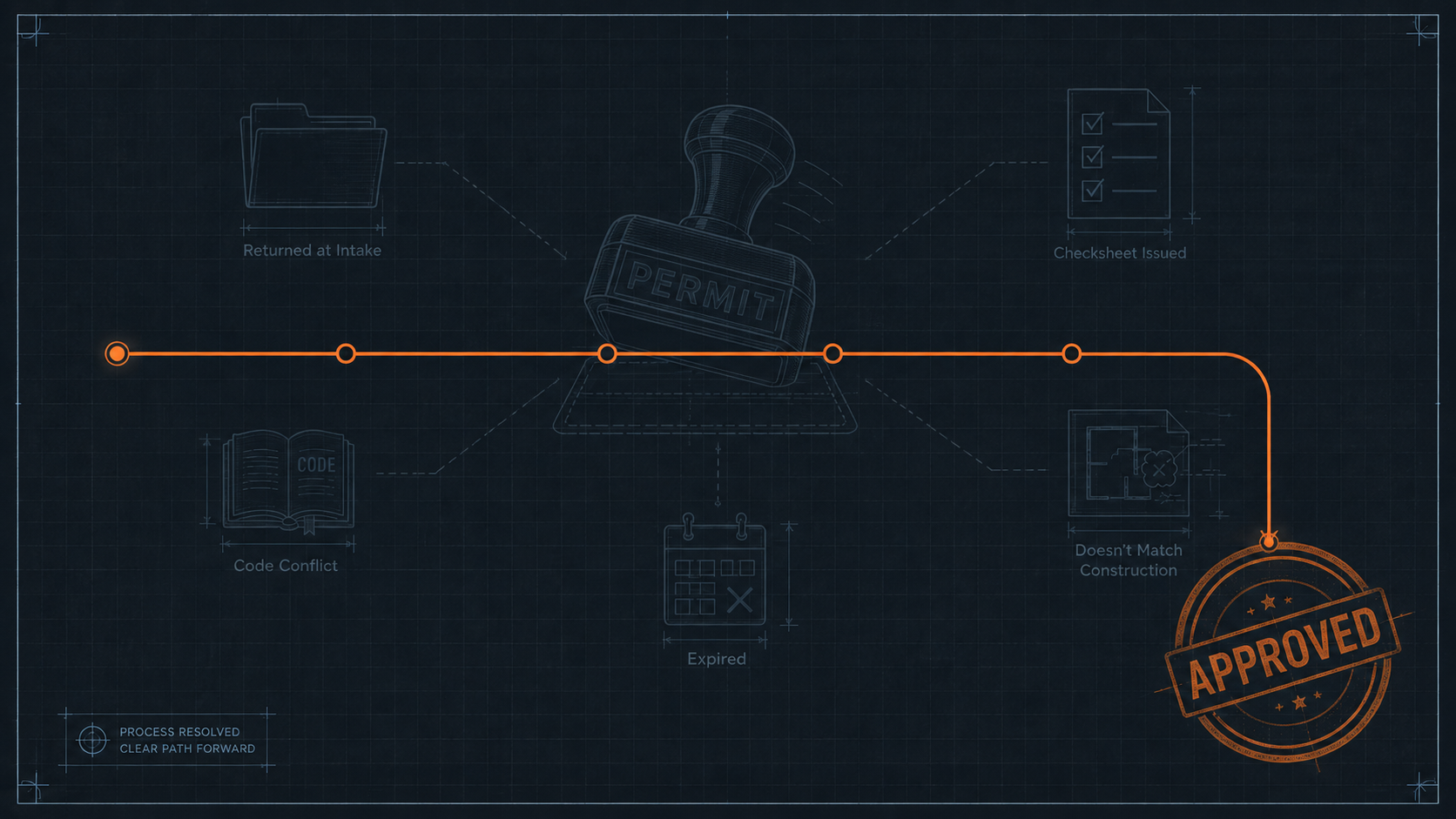
Once the real issue is identified, the path forward becomes much clearer. The goal is to turn scattered permit problems into one focused route toward approval.
A resubmittal that closes the review generally has four coordinated parts: one written response for every comment, in the reviewer's own numbering; exact references to every revised sheet and detail, marked with the jurisdiction's required revision conventions; every affected document updated together, not just the one sheet the comment pointed to; and any calculations, listings, evaluation reports, or photographs needed to verify the fix, rather than leaving the reviewer to reconstruct the argument.
In Portland, applicants are directed to wait for all assigned reviews to finish before responding, and to address every checksheet together — correcting one discipline's drawings before another discipline weighs in tends to create a second round of conflicts.
Your First Move When a Checksheet Lands
Confirm what's actually being asked. Read every comment before revising anything — a partial read produces a partial response.
Sort comments by category and discipline using the framework above.
Separate quick fixes from real decisions. A missing dimension can be fixed today. An interpretation question or a code conflict shouldn't be revised around before it's resolved.
Build the response matrix and assign each item to the consultant who owns it.
Draft the narrative response before touching the drawings, so the written explanation and the revised sheets are built to match.
Frequently Asked Questions
What is a checksheet on an Oregon building permit? It's a written list of items — missing information, code conflicts, or coordination issues — that a plan reviewer needs addressed before approving that discipline's portion of the review. It's not a denial, and the permit typically stays active while you respond.
How long do I have to respond to a checksheet? Response windows vary by jurisdiction and are usually listed on the checksheet itself or in the portal. Check your specific deadline before assuming a standard timeline applies.
Why did my resubmittal get another correction notice? Usually because a response answered the comment in writing but didn't fully revise the drawings, left conflicting information on another sheet, or addressed some comments while missing others. A response matrix that tracks every comment to a specific sheet is the most reliable way to avoid this.
Do I need an architect to respond to a checksheet? Not always. A missing note or dimension can often be handled directly. Comments involving occupancy, egress, fire-resistance ratings, accessibility, or structural triggers usually benefit from a professional who can coordinate the response across disciplines.
Get Help With a Checksheet That Won't Close
JR-DBA reviews the checksheet, categorizes each comment, and prepares a coordinated resubmittal for residential and light commercial permits throughout Portland, Beaverton, Hillsboro, Washington County, and the broader metro area, including Vancouver, Camas, Battle Ground, and Southwest Washington.
Contact JR-DBA at Joshua@jr-dba.com or 971.217.7967.
Related Reading
My Oregon Building Permit Was Rejected or Stalled—What Should I Do Next?
Appeals, Variances, and Alternate Methods: What to Do When the Code Says No
Oregon ADU Permit Timeline: How to Reduce Checksheets and Resubmittals
Author Note
Joshua Richards is the principal of JR-DBA. His credentials include ICC certifications as a Commercial Building Inspector, Commercial Plans Examiner, Residential Building Inspector, and Residential Plans Examiner. JR-DBA provides architectural design, building-code and permit support, commercial due diligence, and owner representation throughout the Portland metro area and Oregon. Reach out at Joshua@jr-dba.com or 971.217.7967, or learn more at jr-dba.com.
